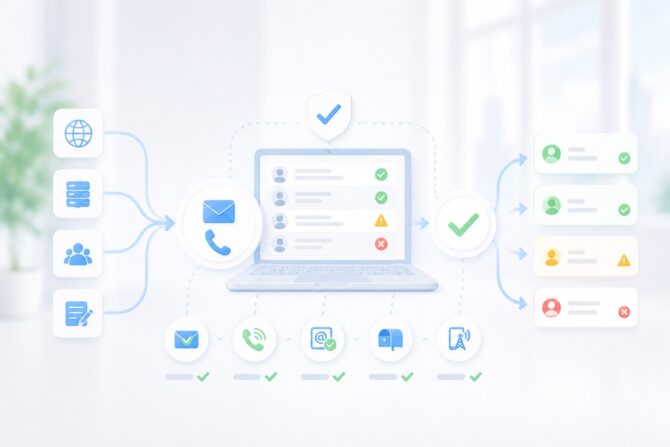
“Verified data” is one of the most common phrases in a B2B data pitch — but what does verification actually involve? Understanding how vendors check emails and phone numbers helps you judge whose “verified” means something. Here’s a clear look at the methods and how to evaluate them.
Why Verification Matters
Verification is what separates a current, usable record from a guess. Without it, a database is just a snapshot that may already be wrong. Because verification quality directly drives your bounce rates and connect rates, how a vendor verifies is one of the most practical things to understand before buying.
How Email Verification Works
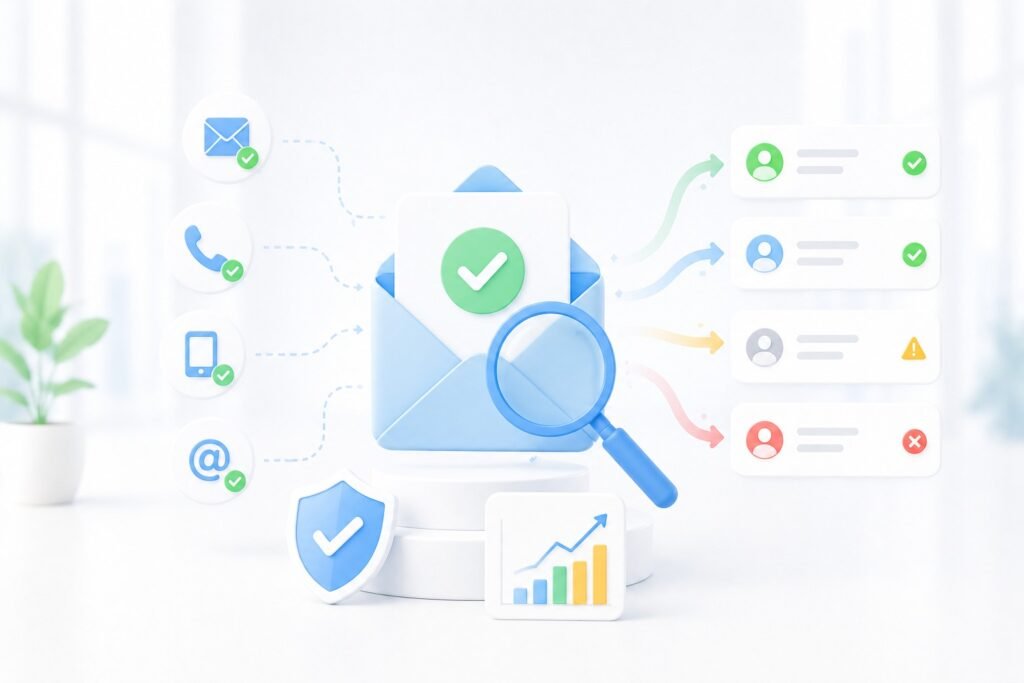
Reputable vendors verify emails technically rather than by sending test messages. The process typically confirms that the domain exists and is configured for mail, that the specific mailbox appears valid, and that the address fits known patterns for the organization. This catches most undeliverable addresses before they ever reach your campaign, lowering bounce rates.
How Phone Number Verification Works
Phone verification confirms that a number is active and, ideally, that it connects to the right person or organization. This is harder than email verification and often involves a mix of automated checks and human confirmation, which is part of why accurate direct dials are among the more expensive fields to source and maintain.
Automated vs. Human Verification
Automated verification is fast, scalable, and well-suited to checking large volumes of emails. Human verification — an actual person confirming a detail — is slower and costlier but more reliable for high-value fields like direct dials and senior contacts. The strongest providers combine the two, using automation broadly and human checks where accuracy matters most.
How to Tell If a Vendor Verifies Well
Ask how, and how often, they verify each field type, and whether verification is automated, human, or both. Then test the result: request a sample and check deliverability and connect rates yourself. A vendor that verifies well will welcome the test; one that’s vague or resistant may be relying on stale, unverified data.
Verifying Data on Your Own Side
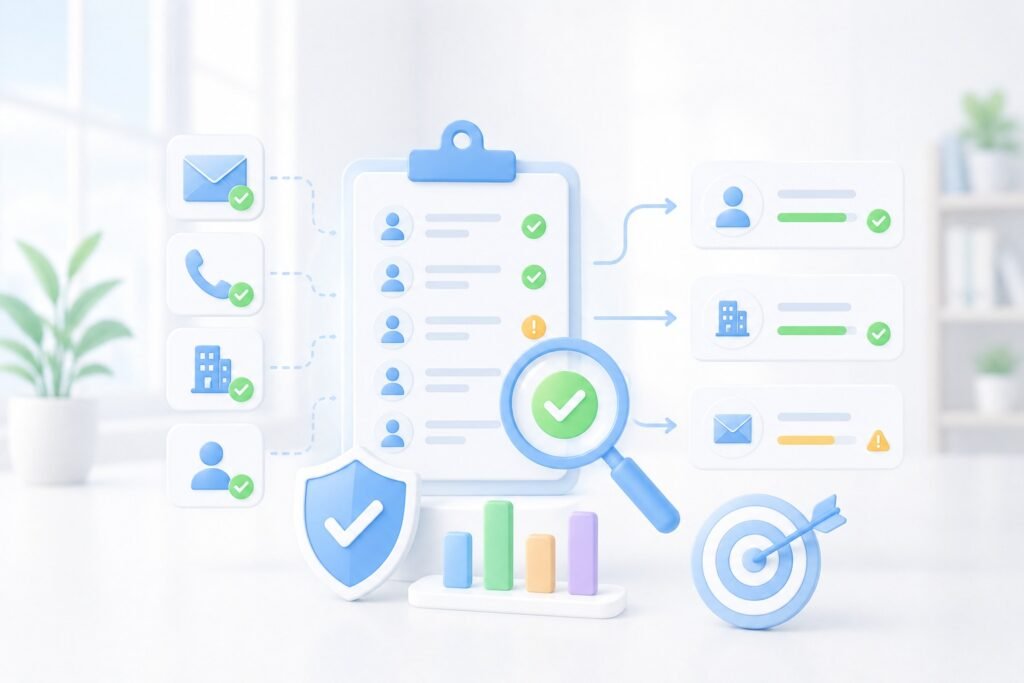
Verification doesn’t end at purchase. It’s good practice to re-validate emails right before a send and to periodically recheck data already in your CRM, since records decay over time. Treating verification as a continuous habit — on both the vendor’s side and yours — keeps your outreach landing.
Key Takeaways
Vendors verify emails through technical checks and phone numbers through a mix of automated and human methods, with the best combining both. Verification quality and frequency drive your bounce and connect rates, so ask how it’s done — then confirm with a sample test. And keep verifying on your own side, because data keeps changing.
Frequently Asked Questions
How do vendors verify email addresses?
Through technical checks — confirming the domain exists and accepts mail, the mailbox appears valid, and the address fits known patterns — rather than sending test emails.
How are phone numbers verified?
By confirming a number is active and connects to the right person, often using a mix of automated checks and human confirmation, which makes accurate direct dials more costly.
Is human or automated verification better?
Each has a role. Automated verification is fast and scalable; human verification is more reliable for high-value fields. The best vendors combine both.
Should I verify data myself after buying?
Yes. Re-validate emails before sending and periodically recheck CRM records, because data decays continuously regardless of how well it was verified at purchase.
How accurate should verified email data be?
No database maintains perfect accuracy because contact information changes constantly. Instead of looking for unrealistic guarantees, ask vendors about their verification process, update frequency, and typical bounce-rate expectations.
What is email validation?
Email validation is the process of checking whether an email address is properly formatted, associated with a valid domain, and capable of receiving messages. It helps reduce bounces before a campaign is launched.
Why do verified contacts still sometimes bounce?
Because business data changes continuously. A contact may leave a company, an email account may be deactivated, or a domain may change after the record was verified. Even high-quality data benefits from a final validation before use.
How often should contact information be re-verified?
High-value contact data should be re-verified regularly, ideally through continuous monitoring or periodic refresh cycles. The longer a record goes without verification, the greater the risk that it has become outdated.
What questions should I ask a vendor about data verification?
Ask how records are verified, how frequently verification occurs, whether human review is involved, how outdated records are removed, and what quality metrics they track. These answers reveal far more than simple record-count claims.
Does stronger verification justify a higher database price?
Often yes. Better verification typically leads to lower bounce rates, more accurate targeting, higher contact rates, and less wasted sales effort. In many cases, higher-quality verified data generates a better return on investment than a larger but less accurate database.